Joyful Learning Through Math, Art and Play!

30 April 2025

Creative Days & Autumn Ways: A Peek from My Desk

Hello sweet friends,

I just wanted to pop in with a little update from my desk, where the coffee is warm, the ideas are flowing, and the crisp autumn air is helping me feel creative and calm. There’s been lots going on behind the scenes, and I’m excited to share a few little peeks with you!

One Page Craft Pack 9 is so close — and this time, I’ve added a little extra sparkle! Instead of the usual 20 crafts, you’ll find 24 craft projects, all starting with a square. Just a little longer to wait… but I promise it’ll be worth it! Keep an eye out — the Pond Update is coming soon with all the details (and some lovely savings too): News from the Pond

Sneak Peek: New Square Crafts Coming Soon

Over on Instagram, I’ve been sharing quick, playful math warm-up ideas — like estimation jars and everyday classroom items for a speedy start to the day! You might’ve spotted the Leafhopper Wand too – more on that coming soon in the Math Newsletter. Did you get yours yet?

Estimation Jars & Morning Math Magic


Also fresh in Math Kit Bundle 2: a big number track to 20 — perfect for helping the whole class count together after estimating. 

Count On It: New Track to 20 for Class Fun!

And here’s a fun warm-up idea: drop counters (or blocks) and listen to the sounds to count along. Make it trickier by using place value blocks — tens have a different sound than ones! It’s fast prep, full of learning, and great for your math table.

Listen, Drop, Count: Sound-Smart Math!


In the store now — a Cherry Blossom Art Lesson, just in time for a seasonal burst of creativity! With a full lesson plan, a quick guide, and materials you likely already have (just paper, crayons, and watercolors or a print-and-trace outline), it's easy to jump right in: Check it out on TpT

And coming up: the May Doodle Challenge! I’ll be working on it this week — if you’d love to join, be sure you're signed up for the doodle newsletter here: Creative Planner Newsletter

May Doodles Are Coming – Join the Fun!

And personally… I’ve been soaking up the little things — trying to learn, grow, create, and stay inspired. This morning I took a quick walk and was lucky enough to see baby dolphins learning to jump, tiny fish darting past in a shimmer, a wagtail dancing along the fence, and a seabird soaring high above. These quiet little moments of wonder remind me how important it is to pause and look around.

Thanks for being here — I’ll see you again very soon!

With love,
Melanie

SHARE:

28 April 2025

Building Confident Estimators: A Daily Math Warm-Up That Sparks Number Sense and Playful Learning

Building Confident Estimators in Kindergarten: Making Estimation Visible and Playful

Estimation often feels like one of those fuzzy math skills — both for young children and for teachers. It's easy to assume children will naturally learn to estimate with enough practice, but in truth, estimation needs clear modeling, structured opportunities, and lots of playful exploration. Without support, we often see children either wildly guess (A thousand!) or try to count everything exactly because they don't yet trust their own instincts.

In this post, we'll look at observable signs that children may be struggling with estimation, a simple daily warm-up to build habits of thought, and some easy strategies to make estimation feel real, visible, and connected to their play.

Daily estimation jar filled with colorful hippo counters for hands-on math warm-up

What Struggling Estimators Often Show Us

When children have little experience with estimation, a few common patterns appear:
  • Random Large Numbers: Children might blurt out a big number without even looking carefully.
  • No Visual Scanning or Anchoring: They respond immediately without pausing to size up the set.
  • Immediate Counting Attempts: Some students instinctively begin counting, unsure that "guessing" is allowed or valid.
These are not signs of failure — they're important clues that children need more experiences with quantity, comparison, and trust in their own thinking.

A Simple Daily Routine to Build Estimation Muscles

One powerful warm-up is a daily estimation jar.

Each day before math lessons begin, a jar filled with different objects invites students to:
  • Look carefully.
  • Make a quick estimate.
  • Count together as a group to check - use a frame or grid to reinforce 1:1 over estimation now. 
Students recording their estimation guesses on dry erase jar cards during morning math routine


Each day, vary the items: large plastic hippos, math teddies, small buttons, cotton balls, pencils, building blocks. 

Different sized objects introduce the idea that space taken up isn't always linked directly to number of objects — a powerful conversation starter!

After estimating and counting, the items from the jar can be moved into independent play bins. 

Throughout the week, children naturally revisit the materials — lining them up, grouping them, sorting them, touching and thinking through number relationships as they play.

Adding ten frames, rulers, counting frames, and numeral cards to the play area extends the experience and supports natural exploration of quantity, measurement, and number identification.

Supporting Students Who Struggle with Estimation


Some children will need even more scaffolding to connect quantity with number sense. Here are simple strategies teachers can use:

  • Label the Jar After Estimation: Once counted, place a numeral card next to the jar for the rest of the day. This helps slower processors revisit and solidify the experience.
  • Mini Breaks During the Day: In spare moments, the teacher can add or remove a few objects from the jar and quickly invite a new estimate. These brain breaks only take a minute but help children recalibrate and reinforce flexible thinking.
Using a 20-frame to count and arrange small objects after the estimation reveal

Simple math warm-up setup at teacher desk: estimation jar, numeral cards, and counting frames
  • Check Foundational Counting Skills: Watch for children who:
  1. struggle to count a set accurately (1:1 correspondence).
  2. Cannot build a set to match a given number.
  3. Appear unsure of "how many" even after handling objects.
Noting these students for follow-up in small groups allows targeted support on general number awareness.

Three Core Teaching Moves to Grow Estimation Skills

Model Anchoring to Known Quantities

  • Talk aloud:"It looks like about 10… maybe a little more."
  • Teach the idea of "more than," "less than," and "about" — language helps internalize number relationships.

Teach Grouping and Clumping

  • Encourage seeing sets within sets:
  • "I see about 5 here, and about 5 there."
  • Grouping supports faster mental approximations instead of unit-by-unit counting.

Always Pair Estimate → Count

  • Feedback matters. After guessing, always count so students get immediate calibration of their number sense.
Children exploring counting, grouping, and measuring during independent play with math materials

The Big Idea: Play IS Math

Sometimes we underestimate how much number sense grows in free play:
  • Sorting objects, measuring spaces with blocks, lining up materials, grouping and regrouping during exploration — these playful activities lay the deep foundations children need to feel number relationships.
  • When we honor play as real math learning, we help young children build the intuition and confidence estimation requires.

Estimation can — and should — be joyful, visible, and explicit.

With simple routines like the daily jar warm-up and mindful supports woven into the day, we can grow confident, capable young estimators who trust themselves to think about numbers flexibly

Want to try it? Here's the Quick Play version you can use right away at your teacher table!

Quick Play: Estimation Jar Warm-Up

  1. Fill a Jar - Each morning, fill a clear container with small, same-size objects (like counters, shells, blocks).
  2. Estimate - Students make a quick guess — writing it on a dry erase jar card or in math journals.
  3. Reveal and Count - Count the objects together using a ten frame, ruler, grid, or hundred chart.
  4. Reflect - Talk about who was close, what helped, and how the size of objects matters.
  5. Keep Materials Out for Play - Move objects to math centers for free play with counting frames and numeral cards.

Optional:
Quick mini-estimates later in the day by adding or removing objects!

SHARE:

From My Desk: New Crafts, Coloring Pages, and Creative Learning Fun!

🌸 A Little Update From My Desk 🌸

Hello!

I just wanted to pop in and share a little bit about what I’ve been up to lately. I’m here at my desk, happily brainstorming, doodling, sketching, and creating fun, engaging ways to make learning skills-focused and exciting for your learners — both at home and in the classroom! ✏️🎨

Every day, I feel so grateful to spend time crafting resources that help you support your students. Whether it’s planning independent learning centers or creating activities that spark joy, I love thinking of new ideas to make your teaching life just a little bit easier. And remember — if you ever have any ideas, requests, or feedback, don’t hesitate to reach out. I’d love to hear from you!


Here’s what I’ve been working on lately:

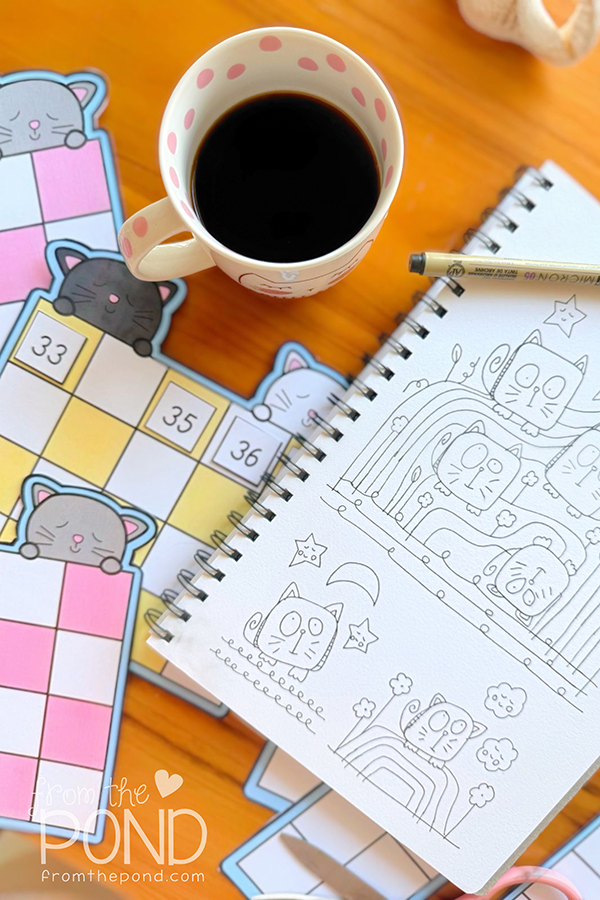
Catnap Count – Peaceful Math Play

Catnap Count – Math Play Mats

Organize your students' numbers and counting skills with my new Catnap Count Math Kit! I created peaceful 10 and 20 grids for calm, happy math play. (Though you might want to challenge your learners to stay alert while the kittens snooze! 🐱💤)

Check it out here: Catnap Count on TPT

Creative Time at My Desk

New Free Coloring Page – Chocolate Lily

I’ve added a new freebie to the Pond Coloring Club page! The Chocolate Lily is a fascinating Australian native flower that I’ve really enjoyed doodling lately. Your students might love learning about this unique plant too!

Grab the free coloring page here: Pond Coloring Club Free Pages

New Free Chocolate Lily Coloring Page


New Craft Pack – Starting with a Square!

I’m finishing up a brand new craft pack that is perfect for independent learning centers! Each project starts with a simple square that students can cut out easily and confidently, helping them dive straight into the task while you work with small groups. There will be 25 different animals, all beginning with a square!
Make sure you're following my TPT store so you don't miss the release: From the Pond on TPT

Square Start Animal Crafts – Coming Soon!

What’s Coming Up

I’m looking forward to another wonderful week of creating and sharing! Keep an eye out for:
  • A new Pond Update newsletter
  • One Page Craft Pack 9 - The Square Animals 
  • Some Mother's Day ideas
  • A fun doodle challenge (join the Creative Planner newsletter list for this)!
Need more inspiration? You can always visit:
👉 From the Pond News
👉 From the Pond Creative Planner

Thanks for being here and being part of this joyful learning adventure with me! 
Talk soon,
Melanie 💕
SHARE:

25 April 2025

A Fast & Fun Math Warm-Up Using Grid Cards

A Quick & Fun Math Warm-Up Using Grid Cards

Looking for a low-prep, high-impact math warm-up your learners will love? This simple activity uses any of the grid mats from my Math Kit Bundles and is perfect for repeated numeral practice, number sense, and even reinforcing reading directionality!

Grid Card Math Warm-Up: Numeral Practice Made Fun!

Here’s how it works:

Want to level it up? Try these quick variations:

  • Say the number +10, +2, +5 or +3
  • Say the number 4 less, 2 less, 1 less or more
  • Say the number 5 more, 13 more, 7 more
  • Halve the number, multiply it by 3
  • Say double the number
Instant differentiation, and no extra prep required.

Why we love it:

  • Easy to set up
  • Engaging for learners
  • Supports directionality and number sense
  • Works with any grid mat in the bundles
Try it during your next small group, morning tub, or transition time—this one’s a keeper!
SHARE:

24 April 2025

Bee-ing Fluent Within 5! A Warm-Up Game with Bee Grids & Dice Fun 🐝🎲

Hey teacher friends!

If you’re working with kindergarten students on building fluency within 5 and want a hands-on way to explore addition and number combinations, I have something sweet and simple that’s going to buzz with learning potential. 🐝

🐝 Busy little mathematicians filling their Bee Grids — can they make every row and column add up to 5?

You might already have my Bee Grid cards from the Math Kit Bundle 1 – well, I’ve just given them a little glow up! In addition to the original version with bee “stripes” (rows of 3 to build subitizing skills and structure awareness), I’ve now added plain grids for open-ended play and page-sized Bee Grids for even bigger learning moments.

These versatile cards open up so many possibilities for small group work, math centers, and warm-ups at your math table. And today, I want to share just one of the many activities you can do with them – a quick, hands-on warm-up to build fluency and flexible thinking with numbers 1–5.

🐝 Warm-Up Game: Bee Grid 5s!

This activity is all about fast recognition, number combinations, and some math strategy!

You’ll need:

  • A 3x3 Bee Grid for each student (use the printed version or laminate for reuse)
  • A 1–3 dice (Use dot dice, numeral dice, spinner, or number cards. You can find printable versions like the heart dice, [ladybug dice], or dot cards from the Math Kit!)
  • 9 small dice per student (or dry-erase markers if writing numbers)
  • Optional: a bee puppet or story prop to set the scene 🐝

Set the Scene

Start with a quick bee-themed story to spark imaginations!

The bees are busy buzzing through their flower garden today. Each flower holds a little nectar treasure – just enough for 1, 2, or 3 bees. Let’s help the bees spread out their visits so every row and column has just the right amount – a total of 5!
🎲 Roll, choose, place! This hands-on game turns number fluency practice into a strategic math moment.

How to Play:

  • Each student gets a 3x3 grid.
  • You can use laminated cards and markers or physical dice.
  • Roll a 1–3 die.
  • Encourage quick recognition – say the number or show it on fingers.
  • Place that number on any empty square of the grid.
  • You can place a matching die.
  • Or write the number or draw dots.
  • Repeat until the grid is full!
  • Students roll and place one number at a time, making intentional choices as their grid fills.
  • The goal: Create as many rows and columns that total exactly 5 as possible.
✍️ Using dice or dry-erase markers, students build combinations to 5 with focus and excitement!

Let the Thinking Begin!

As the game goes on, students will start to:
  • Think ahead about placement (“Where should I put this 2?”)
  • Combine numbers mentally (“I already have a 3 and a 1 – I need a 1 here!”)
  • Reflect on sums to 5 in different combinations
You might hear things like:
  • “I need a 2 to finish this row!” or
  • “Oh no, this column is already at 4!”
That’s the magic—playful learning, rich math talk, and lots of number fluency practice!

Why It Works

This simple warm-up blends so many foundational skills:
  • Subitizing
  • Counting on
  • Strategy and decision-making
  • Flexibility with numbers (How many ways can I make 5?)

And the best part? It’s quick to set up and adapt. Try it with partners, do a “teacher vs. students” version, or make it collaborative: “Let’s fill one grid together!”

Ready to Try It?

If you already have the Bee Grid cards from the Math Kit Bundle 1, go ahead and print out the new plain grids or page-sized versions for even more play.

If you don’t have the full bundle yet, grab the printable dice and dot cards to get started right away!

Let your little bees fly through their grids and watch the math magic happen. 

Let me know how it goes in your classroom – and if your students come up with new ways to play, I’d love to hear them!
SHARE:

22 April 2025

Sleepy Little Star Action Rhyme & Craft for Kindergarten – Movement, Counting & Fine Motor Fun!

Sleepy Little Star – A Sweet Action Rhyme for Lesson Transitions


Looking for a gentle and engaging way to help your Pre-K or Kindergarten students transition between lessons? "Sleepy Little Star" is a short and soothing action rhyme that gives young learners a moment to pause, stretch, and refocus.

This sweet little verse is perfect for standing up between parts of a lesson, or as a quick brain break during circle time:

Sleepy Little Star

Sleepy little star,
Up in the sky,
Lift up, stretch—
Fingertips high.

As you say the rhyme together, encourage children to reach their arms up to the sky and stretch their fingertips high—just like a sleepy star waking up in the morning sky.

Extend the Fun with Counting

To add a math twist, have your students show numbers with their fingers as you say the rhyme again. You can pause before the last line and ask:
  • Can you show me five fingers?
  • What does two look like?
  • Let’s count how many stars are waking up!

This adds a subtle, playful layer of subitizing, number recognition, and one-to-one correspondence—right alongside language and movement.

Need visuals? You might love our Skip Counting Hand Display – it’s a great addition to your math wall for ongoing reinforcement.
 
Sleepy Little Star Craft Display

Kindergarten Action Rhyme in Motion

Make a Sleepy Star Craft

To keep the learning going, visit the Pond Coloring Club where you’ll find an adorable Sleepy Star craft. It pairs perfectly with this rhyme and gives students a chance to create their own little star for display. Consider making a bulletin board full of stretching stars with your class!

For more classroom-friendly finger plays and action rhymes, don’t forget to explore our growing collection here:

👉 Finger Plays and Action Rhymes at From the Pond

Whether you're transitioning between lessons, starting your day, or calming down after play, Sleepy Little Star is a lovely way to bring movement, language, and a little magic into your classroom routine.

Counting Hands and Star Bulletin Board Idea


SHARE:

Make Math Roar: Hands-On Dinosaur Clip Cards for Counting, Comparing, and Place Value Fun!

Make Math ROAR with Fun – New Dinosaur Clip Cards!

Do your learners love dinosaurs? (Honestly, who doesn’t?) Then you're going to love this brand-new resource I just released – Dinosaur Clip Cards! These adorable math center cards are designed to help kids practice counting to 10 while strengthening fine motor skills and building number sense – all through play.

With 10 different cute dinosaur designs, each card is available in both numbered and plain versions to suit a range of learning styles and activities. Whether you're focusing on verbal counting, numeral recognition, one-to-one correspondence, or even early place value, these versatile cards will fit right into your math block.

Why Clip Cards?

Clip cards are a classroom favorite for good reason. They combine movement, storytelling, and meaning with math – helping learners connect physical action with abstract concepts. As children count and clip pegs to the dinosaur’s “scales,” they're not just learning numbers – they’re using their hands, eyes, and brains in a truly engaging way. It’s math in action, and it sticks

Here are a few fun ways to use them:

Roll and Match

Invite students to roll a dice, count out that many counters, and add them to their dinosaur’s scales. Then, choose another dinosaur and compare!
"Who has more?" "How many more?" "What's the difference?"
A natural way to introduce comparison language and early subtraction.

Dinosaur Clip Cards – Counting with Pegs and Dice

Place Value Play

Use cube blocks or counters and have students roll a die, adding cubes to a pile. Once they collect 10, they trade for a place value block! They can then clip pegs to represent their number – and even try building a 2-digit dinosaur number!

Comparing Numbers with Dinosaur Clip Cards

Number Talk Challenge

Roll a numeral dice, clip the matching number of pins to the dinosaur, then hide the dice. A friend in the group has to guess the number based on the clips – and together, they can count backward as they remove them. This builds fluency in a playful way!

Dinosaur Math Center – Roll, Count, and Clip

Place Value Fun with Cute Dinosaurs

Fine Motor and Number Sense in Action

Interactive Math Games with Dinosaur Clip Cards


These clip cards are not just a math tool – they’re a story starter, a fine motor booster, and a confidence builder all in one. Whether you use them in small groups, centers, or even 1:1 intervention, your learners will love interacting with these dino friends!

You can grab your set now over on Teachers Pay Teachers:
👉 Dinosaur Clip Cards – Counting to 10

Let’s make math magical, meaningful, and just a little bit prehistoric.
SHARE:

20 April 2025

Ladybug Classroom Activities and Ideas for Kindergarten and Early Learning

Hello friends,

Time flies when you're having fun – especially when you're learning with ladybugs!

This time of year always feels just right for a little ladybug fun in the classroom (or at home, if you're learning there). Along with some cheerful ladybug coloring pages in the Pond Coloring Club, I’ve gathered up a few bright and happy ideas to help your little learners stay curious, creative, and on-task.

One of my favorite new additions is this sweet and simple Action Rhyme – perfect for stretching, clapping, and helping with classroom transitions. Give it a try!

Ladybug Action Rhyme

Ladybug flies at half past two, (stretch arms wide)
She lands on a clock—what will she do? (point like a clock hand)
Clap your hands, it's three o'clock! (clap three times)
Roll your hands, tick-tock, tick-tock! (roll hands like a wheel)
Stretch up high, it's half past four! (reach arms to the sky)
Ladybug laughs and flies once more! (stretch arms).

Bright Ladybug Clocks for Learning Time in the Classroom

Ladybug Clocks for the Math Wall

Use these bright and cheerful clocks as a math wall display or as hands-on review tools for telling time to the hour and half-hour. Pair with the action rhyme above for some movement-based math fun!

Ladybug Writing Prompts and Informational Worksheets

Writing About Ladybugs

Give your students space to explore what they know (and wonder!) about ladybugs. These writing resources are great for building nonfiction writing stamina while learning about living things.

Ladybug Directed Drawing and Rainbow Art Project

Drawing, Reading & Handwriting Fun

Create a rainbow of happy ladybugs with simple lines and movements. Try scribbling crayon textures over leaves for a magical print background, then layer ladybugs on top for a vibrant nature-inspired art piece!

Ladybug Classroom Banner for Research and Thematic Learning

Set the Scene with a Ladybug Banner

Start your week of busy bug learning with this bright and happy ladybug banner! It’s a sweet way to welcome students into your space and signal that something fun (and full of learning!) is happening. Perfect for creating a buzz around research, writing, and your classroom theme of the week!

Ladybug Math Cards for Sorting, Counting, and Partitioning

Ladybug Math Warm-Ups & Mini Lessons

Use these math kit cards for quick warm-ups: count small collections, sort by size or color, or explore part-part-whole math thinking. Easy to adapt for a variety of learners and math levels.

Ladybug Math Cards for Sorting, Counting, and Partitioning

Hope you have a ladybug-filled week of learning, laughter, and lots of little discoveries!
Until next time,

💛 Mel x
SHARE:

18 April 2025

Easter Fun in the Classroom: Creative Crafts, Math Games & Sweet Moments from My Desk

Hello lovely, how are you? 💛

I’ve been busy at my desk this week, tucked away with a cup of tea and a sketchpad, getting some special things ready for Easter! If you’ve been following along on Instagram or caught the latest email newsletter, you might’ve seen a few sneak peeks of what’s been happening behind the scenes. It’s been such a joyful creative week, and I wanted to pop in and share a little update with you here too!

Easter Bunny Drawing Fun

First up, there’s a brand new Easter Bunny Directed Drawing that I’ve added to Fun Bundle 2! It’s built with simple shapes and lines, so it’s easy for little hands to follow. 

Easter Bunny Directed Drawing Activity for Kids


You can use it as part of a drawing activity, a writing prompt, or even turn it into a full art project. I imagine it looking so sweet with some textured pieces like ribbon or felt collaged onto the background—what a lovely way to extend creativity and add a sensory element to the task!
Check it out here

Wake Up Sleepy Stars – New Math Game!

Also new this week is a math game called Wake Up Sleepy Stars—a playful way for students to build fluency adding small numbers like 1, 2, and 3. It's perfect for developing confidence with numbers to 5, while also nudging them toward making totals up to 10. This game is a surprise bonus addition to the Numbers to 5 Math Games Bundle, so if you already own it—surprise! You’ve got something new to play with.
Take a look here

A Little Easter Tree for My Desk

I’ve also been crafting away in my own space, and made a little Easter Tree for my desk using a branch from a gum tree popped in a paint tin—just like I used to in my classroom. I was experimenting with the 3D egg crafts I have in the new One Page Craft pack (pack 8), and couldn't resist giving them a proper home. They twirled and danced in the afternoon breeze as I worked, bringing back the sweetest memories. I hope your students (or your own children!) are starting to make special Easter memories too.

DIY Easter Tree Classroom Decoration with 3D Paper Eggs

DIY Easter Tree Classroom Decoration with 3D Paper Eggs

New Printable Easter Egg Baskets

There’s also a fresh printable for Easter Egg Baskets, now with a tracing element included! These are always a favourite—such a fun way to build excitement for an Easter egg hunt, and a great opportunity to blend fine motor skill practice with creativity. I designed these based on doodles from my old sketchbooks—it’s a real joy to revisit those and find new ways to bring them to life.
Explore the printable here

Printable Easter Basket Craft with Tracing for Kids

Printable Easter Basket Craft with Tracing for Kids

Happy Rules Update – Number Tracks Beyond 10!

If you’re working with numbers beyond 10, you’ll want to check out the newly updated Happy Rulers set. I’ve added blank number tracks so your students can explore teen numbers, build patterns, and think about place value in a hands-on way. I shared a little warm-up idea for this over on Instagram too—don’t forget to follow along there for quick tips and fresh inspiration!
See the updated rulers here

Number Track Math Activity for Teen Numbers and Place Value


That’s all from me today—but as always, I’m so grateful to be part of your teaching journey. Whether it’s through a printable, a little math game, or a cheerful drawing prompt, I hope the resources I share help make your days easier and your students' learning more joyful.

Thanks for reading, and I’ll see you again soon—with more cheer and creative ideas coming your way! 🌼
SHARE:

03 April 2025

Easter Bilby Directed Drawing and Writing Activity for Kindergarten and First Grade

Triangle Ears and Easter Cheer – Easter Bilby Drawing and Writing for the Week Before Break

If you're looking for a sweet, simple way to combine Easter fun with writing, art, and math concepts—let me introduce you to our new Easter Bilby Directed Drawing and Writing Pack

The Easter Bilby is a charming Australian alternative to the traditional Easter Bunny, and this pack helps young learners explore the bilby through drawing, writing, reading, and creativity. Even better? The drawing is built entirely from triangle shapes and straight lines, making it a perfect opportunity to integrate math learning into your art and literacy block.

Whether you're after a focused art lesson, a shape-based math activity, or a drawing prompt to inspire writing, this pack offers flexible use across your week. It's ideal for the lead-up to Easter break when students are full of energy and classrooms need hands-on, meaningful learning that’s easy to prep.

Easter Bilby Shape Art Project for Kindergarten Students

Why Teachers Love Our Drawing and Writing Packs:

  • Cross-curricular integration – touches on math (shapes), fine motor skills, science (Australian animals), language, and creative writing
  • Simple drawing steps – designed for kindergarten and first grade students, even those still developing confidence with pencil control
  • Writing prompts and extensions – support students in using their drawings as a springboard for writing factual sentences, stories, or poems
  • Versatile planning – use it over one lesson… or make it a full-week celebration of bilbies!
Australian Animal Drawing and Writing Activity for Easter Week

5-Day Easter Bilby Lesson Plan

Here’s a suggested way to roll this out over a week of engaging, low-prep lessons leading up to the Easter break:

Monday – Meet the Bilby

  • Read a story or nonfiction book about bilbies
  • Research and discuss what makes bilbies special
  • Create a class anchor chart of facts about bilbies
  • Optional: Watch a short video about Easter bilbies to add to your discussion

Tuesday – Drawing and Labeling in Journals

  • Show students how to draw a bilby using the directed steps (or demonstrate one live!)
  • Students complete a practice drawing in their writing journals
  • Label parts of the bilby and add 1-2 key facts from the anchor chart
  • Add the drawing steps to the writing or art center so students can revisit them during the week
  • Provide real bilby photos or illustrations to inspire creative exploration

Wednesday – Big Drawing Day

  • Lead a structured art session, guiding students through drawing their bilby on larger art paper
  • Encourage careful line work and attention to triangle shapes
  • These will become your class display pieces!

Thursday – Paint, Color, and Outline

  • Students paint their drawings (or use crayons, markers, or watercolor pencils)
  • Once dry, they can outline with black crayon or marker for extra definition
  • Optional: Begin working on writing pieces to accompany their artwork

Friday – Gallery Walk and Celebration

  • Create a class gallery wall or bulletin board with all the bilbies
  • Invite students to present their bilby art and read their writing to the class
  • Celebrate with a story, a small treat, or a simple Easter-themed movement break
  • Snap a photo for families or your classroom newsletter!
Triangle Bilby Directed Drawing with Writing Prompts for K-1

Integrate with Any Program


This Easter Bilby pack is adaptable to whatever routines you already have in place. Use it in:

  • Morning tubs or fine motor groups
  • Writing centers
  • Mini lessons before break
  • Sub plans for a themed week
  • Art displays for Easter or Australian animal units

Ready to Try It?


You can find the Easter Bilby Directed Drawing and Writing Pack on TPT here: Easter Bilby Directed Drawing and Writing Pack

Wishing you a week of joyful drawing, curious questions, and a whole class of triangle-eared bilbies!
SHARE:

02 April 2025

Hen Roll and Color

So Many Ways to Play: Hen Roll and Color

Looking for a quick, low-prep math activity that builds number sense and brings a smile to your classroom or home learning space? Our Hen Roll and Color page is a sweet way to combine dice play, counting, addition, subtraction, and early problem-solving all in one printable.

All you need is the Hen Roll and Color page printed, a selection of classroom dice, and something to color with—and you're ready to play. This one-page wonder is perfect for centers, early finishers, number warm-ups, or even a calm-down activity with math magic baked in.
 
Hen Roll and Color math activity – perfect for spring centers, dice games, and early number skills in preschool or kindergarten.

How It Works

Each hen on the page is made up of two dice-style dot arrangements—one for the hen and one for the nest. Children can be directed to:
  • Color just the hen
  • Color just the nest
  • Color a complete hen + nest combo
  • Color any hen and any nest that match their roll
  • Color to match a number in whole
  • Color parts that combine to make a total using addition, subtraction, or difference
Printable hen and nest counting game to explore addition, subtraction, and number combinations through playful coloring.

Play Variations Using Different Dice

Changing the dice = changing the learning. Try these simple swaps and rule changes to support different skills:

Basic Matching

  • Roll a standard die
  • Find and color an exact match (e.g., roll a 6, find a hen or nest showing 6 dots)
  • Combining to Make a Number

Roll a standard die

  • Color a combination of hens/nests to make that number (e.g., roll a 6, color a 4 and a 2)
  • Doubles or Sums

Roll two dice

  • Find a hen/nest combo that matches both dice OR their total (e.g., roll a 3 and 2, color a 3 and 2 or a 5)

Numerals Instead of Dots

  • Use numeral dice
  • Students think symbolically, not just visually—no dot counting! Great for building mental math strategies.

Difference Play

  • Roll a 10-sided and a 20-sided die
  • Subtract the smaller from the larger. Color hens/nests to match the difference.
Dice roll coloring page with hens and nests for hands-on number work, subitizing, and creative math fun for young learners.

Skills in Action

Depending on your chosen variation, students are:
  • Strengthening subitizing and visual number recognition
  • Practicing addition and subtraction strategies
  • Exploring part-part-whole relationships
  • Comparing numbers and thinking flexibly
  • Enjoying math as a creative, calm, and colorful part of the day
This simple printable is a springboard for strategy, and you'll be amazed at how engaged children are when given small shifts in instructions and the freedom to explore.

Ready to Play?

  • Try a variation or two this week. You’ll love how easy it is to differentiate for different learners just by switching the dice or the directions.
  • Join the Pond Coloring Club for year-round access to creative, fun coloring pages just like this one!
  • Explore more Play on the Page worksheet games here.
  • Play some spring math games with hens using our Hens and Nest Counting Mats — perfect for story play, hands-on counting, and classroom centers.
Let your students roll, color, and grow their number sense—all in one delightful page. 💛
Happy teaching, and happy coloring!
SHARE:

01 April 2025

Spring Smiles with Chicks and Butterflies – Two Fun Coloring Pages

Looking for a quick burst of creativity this spring? Two of our most-loved coloring pages are ready to brighten your day inside the Premium Pond Coloring Club—Chicks and Butterflies! These printable pages are simple to prep, satisfying to color, and full of cheerful spring energy.

Whether you're setting up a fine motor station, prepping early finisher bins, or planning a calming creative break, these pages bring both ease and joy to your space.

Bright, Bold Chicks

Our chicks coloring page is all about bold fun and visual impact! It features a repetitive design with adorable chicks scattered across the page—peeking, walking, and fluffing up their feathers. The bright, clear lines make this page practically beg to be colored. Kids are instantly drawn to it—it captures attention and invites big, colorful creativity.

Classroom tip: Use this one for group coloring time, then count them forward and back from 12!

Bold Spring Chicks Ready to Color

Butterflies in Flight – A Calming Coloring Page

Beautiful Butterflies

The Butterflies coloring page brings a peaceful rhythm to your coloring table. It features graceful butterflies in mid-flight with large wings and symmetrical patterns, making it great for kids to explore color choices and even learn about symmetry in a natural way.

Classroom tip: Use crayons or pastels for blending colors across the wings. Then cut out and hang your butterflies from the ceiling or windows for a classroom full of spring air!
 

Why Teachers and Families Love the Premium Pond Coloring Club

For just $9.99 a month, members get unlimited access to a growing library of printable coloring pages designed specifically for early learners. The focus is on fine motor development, calming repetition, and the joy of filling a page with color.

New designs are added regularly, and each one is created with thought and care—ready for classroom, homeschool, or weekend fun.

Chick and Butterfly Fun from the Premium Pond Coloring Club

Spring Coloring Pages for Calm, Creativity & Classroom Joy

Ready to Color?

If you’re a Premium Club member, the Chicks and Butterflies pages are waiting for you now! Not a member yet? Hop over to the site and enjoy fresh, creative coloring all year round!

Let the coloring begin—your spring smiles are just a crayon away.


SHARE:

Hen’s Nest Counting Mats: Spring Math Warm-Ups for Counting On and Addition in Kindergarten

Spring Into Counting: Hen’s Nest Math Warm-Ups for K–1

Looking for a sweet and simple way to warm up your math brains this spring? The Hen’s Nest Counting Play Mats are a hands-on favorite for building number sense, encouraging mental strategies, and making counting joyful and meaningful for young learners.

This spring-themed activity is perfect for small group work, independent exploration, or quick daily number warm-ups that don’t require a lot of prep.

Hen’s Nest Spring Math Game – Counting On Activity for Kindergarten

Hen’s Nest Math Warm-Up

Here’s one of our favorite ways to use the mats:
  • Give each student the 6-dot hen mat (this matches a standard 6-sided dice).
  • Have a stack of number cards ready (they’re in the Math Kit Bundle, too!).
  • Students flip a number card and place it on their hen.
  • They roll a dice, then count on from the number on the card, adding that many cubes or counters (aka eggs!) to the nest.
This is a super practical way to model the counting-on strategy—a foundational skill for developing more fluent addition strategies down the road. It helps children practice starting at a given number and counting forward with confidence, pairing each counted number with a physical object.

Counting Eggs in the Nest – Hands-On Spring Addition Warm-Up

Why This Works

  • Counting forward from a known number is a crucial first step toward mastering addition. 
  • The visual and tactile nature of adding eggs to the nest supports 1:1 correspondence and total awareness. 
  • With repeated play, students begin to internalize common addition facts like +1 through +6 naturally.
  • It’s playful, purposeful, and just the right mix of structure and flexibility for early learners.

Spring Counting Math Mat for Kids – Count On from a Number with Dice

Ready for More? Try This Variation:

If your students are already confident with counting on, try this extension:

  • Flip two numeral cards.
  • Students mentally find the total using a known strategy (make ten, near doubles, etc.).
  • They earn an egg counter only if the total is less than a target number (e.g., 12).
  • You can adapt the target number to suit your learners and the number cards in play. This adds an extra level of engagement and encourages flexible thinking and strategic choices.

Spring Math That Grows With You

This activity is just one idea from the still-growing Math Kit Bundle 2—a collection of hands-on games, number mats, and warm-ups designed to make math stick. The Hen’s Nest Counting Mats are part of the latest spring-themed additions and are ready to bring fresh energy to your math groups.

Grab the Math Kit Bundle 2 now while it’s still growing, and get all future additions at no extra cost!
Buy the bundle here.
SHARE:
Professional Blog Designs by pipdig